Odyssey 2.0:
Undoing the
Machine-World
Three years ago
Below is the translation of the introduction I wrote for that occasion —it had never been published online. In it, I explore the didactic virtues of Greek myths for thinking through the tensions between technological progress and emancipation, before touching on various themes addressed in the photographic series and the accompanying tale we created.
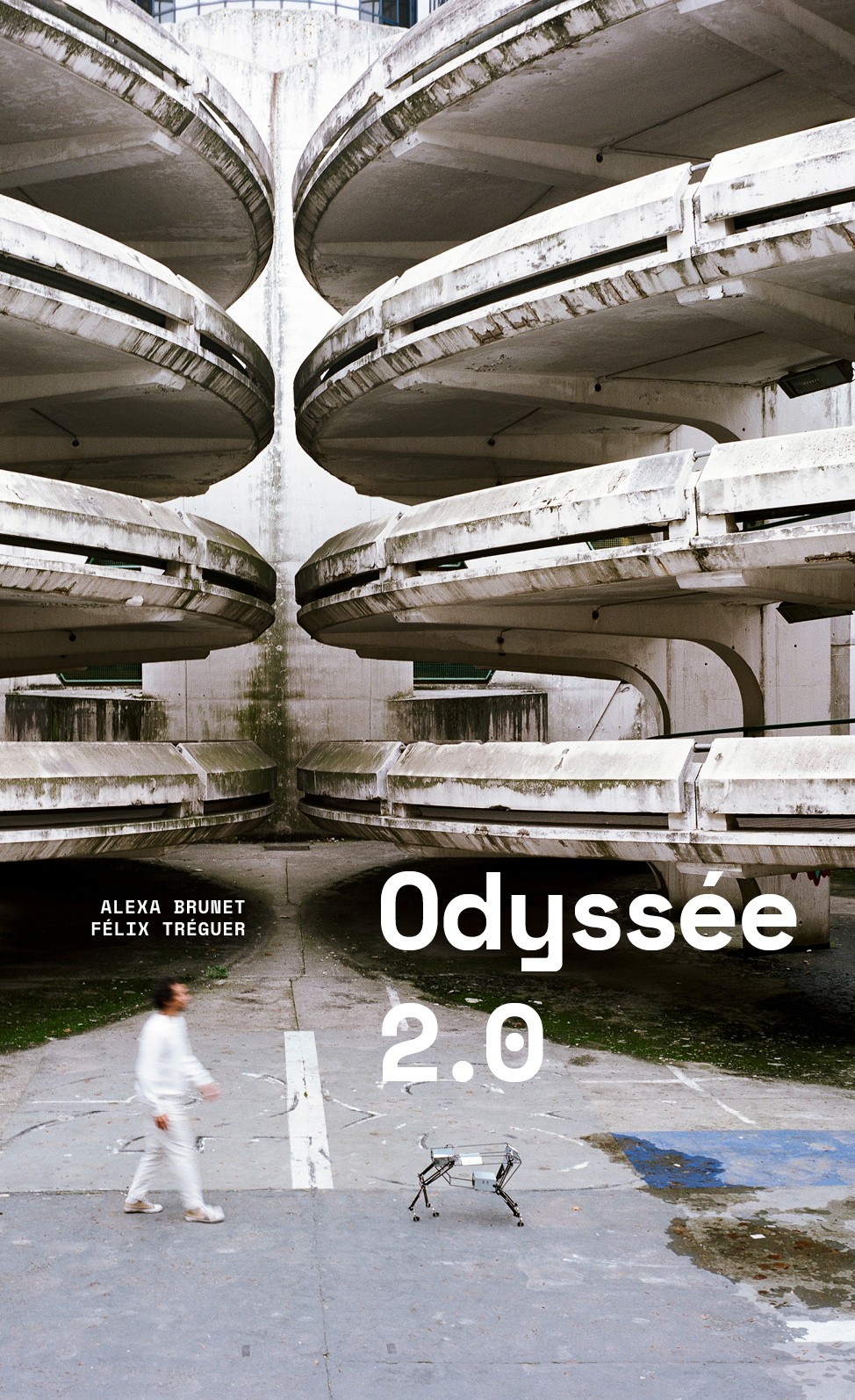
In the aftermath of World War II, as the computer was just being developed, philosopher and logician Dominique Dubarle published one of the first texts devoted to these technologies. In December 1948, in the pages of Le Monde, he attempted to anticipate the political effects of what would soon be called computing. Cybernetics was in its infancy, surveillance capitalism still largely confined to marketing. Yet Dubarle already understood that the computer was destined to become a “governing machine”:
“One of the most fascinating prospects thus opened up,” he wrote, “is that of the rational conduct of human processes, particularly those concerning collectivities that seem to exhibit some statistical regularity, such as economic phenomena or shifts in public opinion.”
For more than half a century, computing has crystallized the age-old project of governing human beings through machines. Today, whether in our public spaces, our homes, or even within our bodies, the digital proliferates. Yet even as many fear that big data and artificial intelligence will accelerate the dystopian trends at work in industrial societies, we remain collectively powerless. The debate remains largely confined to the ethical or legal rules that will allow us to pursue the forward march of “progress” while merely managing the risks it carries. To be sure, we sometimes seek to regulate certain uses, but it seems inconceivable to renounce a given technology once it appears capable of providing a surplus of power.
It is as if we had lost our sense of limits—that sense of limits which humanity has nevertheless patiently cultivated through the ages, particularly through great mythological narratives. Myths abound with secrets that heroes and heroines must not seek to uncover, with automata designed to serve the gods and deceive humans, with Pandora’s boxes that must remain closed lest great misfortunes befall us, with human capacities “enhanced” through hybridizations with animals or the divine. As historian of science Adrienne Mayor reminds us in Gods and Robots (2018), myths constitute, from this perspective, thought experiments—an imaginary space where technologies that were perfectly unrealistic at the time were mobilized within narrative to raise a series of ethical and political issues.
Through these stories that have traversed the ages, our ancestors warn us against the fascination with omnipotence. They underscore the necessary humility that human beings must cultivate toward their own condition and the world around them. They alert us to the harmful consequences of scientific knowledge deployed despite radical uncertainty about its effects. Not that we must renounce discovery, abdicate before enigmas, or cease questioning inherited beliefs. Rather, myths invite us to draw upon ourselves to work toward our emancipation, to use our intrinsic qualities rather than take ourselves for gods. In short, it is a matter of emancipating ourselves without yielding to hubris—that is, to excess—so as not to break with what Hannah Arendt called “the continuity of the world.”
By revisiting the Homeric epic, the photographic journey presented in this book is intended as an invitation to question the frenzied computerization of our lives and environments. This is why, far more than the repeated exercise of resistance to trials as in the original myth, Ulysses’ voyage through the machine-world of Technopolis, a fictional and dystopian “Smart City,” is first and foremost the story of humanity’s compromises and wanderings in its relationship to the digital—a way of addressing the problems posed by the surveillance economy, the normalization of drones, virtual sexuality, and predictive policing.
The Origin of the Machine-World
Computing is certainly not the only technology implicated in the headlong rush by which humanity races toward its doom, but it well illustrates the overflow to which the technical hubris linked to Western modernity has led. Dubarle’s predictions, however audacious they may have seemed to his contemporaries, have taken shape before our eyes. Thus we must measure both what connects and what separates his world from ours.
What connects our two epochs, and what no doubt made Dubarle sense the potential of these new machines, is the long history of the State, of capitalism, and of a type of organization common to both: bureaucracy. As Alain Supiot reminds us in Governance by Numbers (2015), since at least the sixteenth century, modernity has represented the government of society “as a machine whose functioning must be indexed to scientific knowledge of the human.” Thomas Hobbes, one of the most important theorists of the social contract and the State, provides the canonical model in Leviathan (1651): having established a continuum between animal, human, and machine, he proposes conceiving the State as an automaton fabricated by human beings in their own image. For Supiot, this foundational text expresses “a normative imaginary that is still largely ours: one that represents the government of human beings on the model of the machine.” The modern State is conceived from the outset as a great computer.
At that time, by working out the conceptual matrix of “reason of State,” the advisors to European monarchs fully embraced this rationalist and mechanistic imaginary. The State must be organized as a machine dedicated to the rational government of mass societies, capable of implementing techniques of power suited to ensuring control of a population over an increasingly large and integrated territory. Yet this conception of politics, cold and stripped of morality, enters into tension with another social imaginary at the heart of modernity: that of freedom and democracy. This is what philosopher Cornelius Castoriadis emphasizes in A Dead End (1987), a luminous text on the relationships between science, power, and democracy:
“At the heart of the modern epoch, since the end of the ‘dark ages,’ there are two social imaginary significations, intrinsically antinomic though linked (…). Autonomy on the one hand, which has animated both the emancipatory and democratic movements that run through Western history and the renaissance of rational interrogation and inquiry. The unlimited expansion of ‘rational’ mastery on the other hand, at the foundation of capitalism and its avatars (among which, through a monstrous inversion, totalitarianism) and which undoubtedly culminates in the surge of techno-science.”
In this writing, Castoriadis also notes that this “pseudo-rational” mastery implies a rationality conceived “as perfectly ‘objectifiable,’ which quickly came to mean algorithmizable.” Hence the centuries-old quest for an “automation of decisions.”
Modernity has thus given birth to a mechanistic political conception and bureaucratic organizational forms, of which the computer machine constitutes, from its genesis, the expression. But what separates us from Dubarle’s prophetic writings is everything that effectively gave body to the vision he then sketched: decades of dazzling promises about the possibilities offered by computers; decades of investments, experiments, disruptive innovations, and new markets; decades of battering rams ultimately resulting in social representations and practices adjusted to these nevertheless controversial machines.
Futures Already-Here
For computerization was far from inevitable. As early as the late 1960s, the first decision-support systems emerged in political, economic, and military command centers. Intelligence services, police, and social administrations began putting the population into computer files, while in factories and offices, “electronic brains” accelerated paces, dictated break times, measured outputs, and isolated workers from one another. Computing accomplished the project of a “rational” and therefore, supposedly, harmonious government of society. But in the camp of those called upon to endure these developments, as well as among computer scientists and other agents expected to become accomplices to these processes, resistance emerged. People denounced “techno-fascism,” the dehumanizing and monotonous character of these technical systems. Some even went so far as to sabotage them. It was understood that soon most people would be working in front of a screen, and the absurdity of such a project was highlighted. Wherever the computer industry spread, environmental pollution and the health consequences of high tech were already being documented.
Nevertheless, at that time, all these processes were still emergent, scattered, and partial. The mesh of computer control remained riddled with interstices within which the essential part of existence was woven. And then elites were already promising that law would adapt to protect freedoms and ward off dystopia. Everywhere in computerizing countries, there was consent to defend “personal data” against databases and other automated processing. In France, the Data Protection Act was adopted by Parliament in the late 1970s. Article One solemnly proclaimed: “Computing must serve each citizen”; “it must not infringe upon human identity, human rights, privacy, or individual or public freedoms.” A pious wish.
Through these laws, the aim was certainly to reassure the population, to work toward the social acceptability of these machines. Yet even among leaders, one senses behind the fascination an anxiety about their political consequences. In a speech delivered in 1979, the then President of the French Republic, Valéry Giscard d’Estaing, warned against the “supreme alienation” to which an “uncontrolled computerization” would lead:
“Man would become a consumer of images and signs, placed before a universal screen, capable of soliciting all knowledge, all memories, and all services. There would be no need to move: education, shopping, medical consultations, and even professional activity would be done at home. (…) The entire world would be near, but Man would no longer have a neighbor. Such is the ultimate danger: uncontrolled computerization risks social rupture and solitude in the crowd.”
Reading these lines today leads to the chilling observation of a genuine anthropological mutation: in barely a generation, what was still a dire and distant horizon has partly become the world in which we live.
Antennas and fiber optics now permanently connect us to gigantic data centers. The meshes of digital control have tightened to the measure of computing become ubiquitous: more than two-thirds of the world’s population walks around with a smartphone; 13 billion terminals are connected to the Internet; every second, 127 new devices are plugged into the network. So many machines manufactured by people reduced to conditions close to slavery by companies like Foxconn, the global electronics giant. So many sensors and servers that measure, geolocate, archive, generating exponentially growing stocks of data: 64.2 billion gigabytes of data created in 2020 compared to 2 billion in 2010 and 33 billion in 2018—doubling approximately every two years. As for the computing power devoted to processing this data, it too pursues a curve of dizzying ascent.
Such growth obviously requires an ever-increasing supply of materials—particularly rare earths whose extraction generates pollution and armed conflicts—and energy—itself dependent on extractivism and largely indexed to greenhouse gas emissions. In China, electricity consumption linked to data centers and 5G antennas is expected to nearly triple by 2035. For 2040, the computer industry predicts energy consumption linked to digital infrastructure alone equivalent to all energy produced globally in 2010. And due particularly to their very low recyclability, most of our gadgets with planned obsolescence are illegally exported as waste to countries like Ghana, China, India, or Niger, where they accumulate in open-air dumps.
However, in the hushed atmosphere of governmental circles, there is a pretense of not noticing the obvious contradiction of a supposed “ecological transition” that actually relies on massive investments in digital technologies. At the end of 2021, a French minister argued that “the potential benefits of digital technology, whether in logistics, industry, or agriculture, are infinitely superior to their effects on the environment.” And he exhorted: “We must break with a polluting vision of digital technology.” After having excited technophile passions with countless promises for the future, they thus seek to relieve investors and consumers of any qualms, even as evidence accumulates of the disturbing materiality of digital technology. Like the hollow incantations in favor of privacy-respecting digital technology, these counter-truths are meant to participate in disinhibiting the population toward computers. One is, for example, inclined to cite the energy efficiency gains of digital equipment, pretending to forget that these in no way reduce the macroscopic increase in energy consumption due to “rebound effects”: they actually lead to multiplying computing capacities, resulting in overconsumption and fueling the headlong rush of digital technology’s ecological impact. All this, to do what exactly?
Status Quo
In Technics and Civilization (1934), philosopher of science Lewis Mumford noted that “new inventions and new devices have frequently been used to maintain, renew, and stabilize the structure of the old order.” The computer, however revolutionary it may seem, is also the guarantee of the status quo, a machine upon which the powers of this world can count to preserve themselves and, if possible, expand by colonizing new territories. This is why, since the genesis of computing, power—both economic and military—has been indexed to its mastery.
Extending Michel Foucault’s analyses of power, it is Gilles Deleuze who delivered one of the most illuminating analyses of the political role of computing. In his Postscript on the Societies of Control (1990), the philosopher notes that unlike the exemplary punishments inherited from the feudal era and the disciplinary logics typical of nineteenth-century bourgeois and liberal regimes, the most current forms of social control operate “no longer through confinement, but through continuous control and instantaneous communication,” in modes “ever more immanent to the social field, diffused into the brain and body of citizens.” “What matters,” he writes, “is the computer that tracks each person’s position, licit or illicit, and operates a universal modulation.”
If the computer and computer networks constitute the keystone of this new regime of power, it is because in the twenty-first century more than at any other moment in history, the power of states and lords of the economy depends on the proper administration of massive flows—of goods, information, people—which circulate at ever-greater speeds and distances. Now, computing allows the contraction or diffraction of the space-time of power. By enabling massive tracking and identification of a quasi-infinite quantity of moving objects, it makes technically possible and economically sustainable real-time management of flows and their components. “With 9 billion and perhaps 12 billion human beings on Earth, we will no longer be able to administer ourselves through manual means; we will need the help of machines,” thus explained a lawyer encountered in the aisles of a professional salon dedicated to police technologies to justify massive recourse to facial recognition.
The control society is a society of targeting; the computer, a sorting machine. Based on programmed categorizations or those deduced from immense datasets, it lets go, lets pass, grants the requested sesame. Or refuses: “incorrect password,” “individual not recognized,” “suspicious behavior detected.” The barrier remains closed, the social credit decreases, intelligence services or social services now have you in their sights.
You receive family allowances? If you accumulate indices of precarity—single-parent family, tenant of a small apartment in a poor neighborhood, etc.—you will be assigned a high risk score by the algorithm designed by family allowance funds to direct home inspections and recover overpayments. Never mind putting entire families on the street, never mind crushing the future of flesh-and-blood humans. You’re unemployed? Share your data with one of Pôle Emploi’s service providers: “Our tool generates an employability score and helps the job seeker by establishing an action plan that prioritizes strategies based on the diagnosis,” explains Paul Duan, French social entrepreneur and creator of the startup Bob Emploi. The aim, he says, is to “restore power to individuals to act on their employability.” Too bad if the algorithm granted you an employability score of zero, as happened to unemployed people who participated in experimenting with one of these systems. It must be admitted: in staging the character of Ulysses in the machine-world, we did not have to exaggerate much to convey the dystopian scope of these developments. The feeling that “reality exceeds fiction” is undoubtedly one of the most common political affects of our era.
Besides its power and speed, computing has another advantage for power: it allows bureaucracies to reduce their dependence on humans. From this perspective, and despite its colossal costs, it acts in symbiosis with budgetary austerity. When tax authorities decide to use algorithms to monitor social networks and detect cases of tax fraud, it is not simply a way to automate the hunt for the poor by spotting people making a bit of money under the table on Leboncoin. It is also the result of the elimination of thousands of tax inspector positions that must be compensated for. In passing, they rid themselves of civil servants not always willing to obey properly and therefore sources of uncertainties. In a perfectly computerized bureaucracy, no disobedience is possible in applying the rule inscribed in the device, no human conscience that could be so shocked by bureaucratic violence that it would decide to bring the matter to the public stage. Only supposedly rational, assuredly impersonal rules remain. Automation thus participates in the advent of the totally dehumanized government that Hannah Arendt described at the turn of the 1960s: “in a fully developed bureaucracy,” she then emphasized, “there remains no one with whom one can discuss, to whom one can present grievances (…).”
And since “to govern is to foresee,” the computer can just as well become an oracle. “Prediction is not impossible,” Dubarle wrote in 1948 in a cautious litotes, estimating that it would soon be possible to determine, thanks to correlations spotted between these multiple small abstractions of reality called “data,” the “most favorable decision.” It was in this hope that from the 1960s, leaders and men of science invested massively in collecting quantifiable information, devoting immense efforts to transcribing them onto punched cards. These were then processed by computers and cross-referenced with predictive models to produce decision support. Except that reality proved literally incommensurable. In 1969 in the United States, Pentagon analysts set out to find reassuring news to give new President Richard Nixon about the outcome of the Vietnam War. In desperation, they gathered all available data and submitted it to a gigantic computer to which they posed the following question: “When will we win?” The machine—probably a CDC 6600 model from Control Data Corporation—churned for 30 seconds and output the answer: “You won in 1964.”
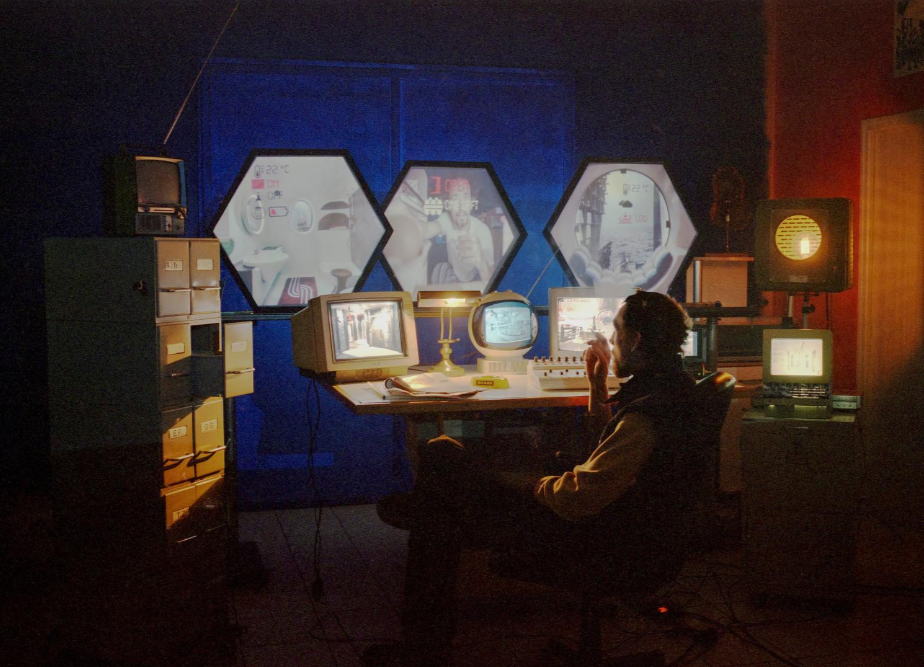
Fifty years later, American military hierarchs have not lost hope. The progress of “machine learning” leads them to think that by crossing several of their artificial intelligence systems—which answer to the sweet names of Cosmos, Lattice, and Gaia—they will be able to anticipate the actions and gestures of their adversaries several days in advance, thus ensuring “global information dominance.”
Reality Subtracted
The history of computing is full of these eternal returns of poorly refined futures. In the 1980s, a boss could miss an important meeting and feel he was missing nothing: thanks to an audio recording of the exchanges, a young employee comfortable with the keyboard would bore herself transcribing the discussion of the big shots by composing a text file, which would reach him a few hours later via email. Magical. Today, if the boss could not join the Zoom meeting “remotely,” speech recognition software can perform the same task in real time. Yet behind the artificial intelligences that transcribe our words, pretend to speak to us and respond to our requests, human hands—often those of women or racialized people—bustle by the tens of thousands to correct the results so that the magic continues to operate. The technology is certainly more advanced, but despite the futurologists’ refrain promising the “end of work” in the age of robots, the latter still require a good dose of exploitation and ever more precarity.
In the digital age, Taylorism becomes more immersive. In the logistics warehouses that spring up like mushrooms along highway hubs, people now work with a headset and microphone riveted to their heads. The software broadcasts to the employee’s ears a synthetic voice to inform them of the coordinates of the product to fetch. Movements are optimized by the supercomputer neatly stored in the locked closet of management. The machine dictates to each person their movements through the aisles and the employee must obey or see their score decrease. Once the product is located, they read aloud the identification code on the packaging so that it confirms it’s the right one. “If you talk to someone without lifting the microphone, the system sends us an error message,” laments an order picker. “Some of my colleagues dream about it at night. Plus, since we tend to turn the volume up full to hear well, it makes us deaf.” Deaf and hollowed out: “We become less sociable, we feel a bit like robots ourselves.”
“Immersivity” is in the image of computing as a whole: practical. So, against the resisting reality, the persisting status quo, we’re multiplying escapes. The planet is burning? Quick, let’s take refuge in the metaverse! “The history of technology in our lives can be summed up by how it has allowed us to express ourselves and discover the world with even more richness,” believes Mark Zuckerberg, CEO of Meta and creator of Facebook. In the metaverse, he promises, “you will be able to do almost anything you can imagine: spend time with friends and family, work, learn, play, shop, create, and many other new categories of activities that differ from how we think about computers or smartphones today.” So many social activities that, thanks to virtual or augmented reality headsets, can no longer escape capitalist surveillance. Will we then be in this entirely fabricated universe like Ulysses visiting the land of the Cimmerians, surveyor of a world “anonymous, faceless, nameless,” the world of the dead? One must hate the Earth, detest people, and love money far too much to thus pride oneself on selling ersatz lives.
Although photos of bare breasts are still censored on Zuckerberg’s social networks, the porn industry has sniffed out the good deal. It is one of the sectors investing most in the metaverse. “It will be very interesting to see how the metaverse will democratize access to sexual relations,” explains for example the falsely naive founder of Vibease, a startup that markets connected sex toys. In the industry, work is underway on designing gloves and other connected tunics capable of simulating the touch of an avatar encountered in the metaverse, particularly via small electrical discharges stimulating the muscles. “We forgot how much the skin could play the role of interface with virtual reality,” notes a shrewd commentator. Tomorrow, we will therefore be able to have such equipment delivered directly to our homes, by drone, to be sure not to encounter anyone. And after our virtual romps, we won’t forget to rate our partner by leaving them a few stars, a thumbs up, or even a few little hearts.
Meanwhile, a beta tester has already reported a case of non-consensual sexual touching in the metaverse. After investigating this assault, Meta estimated that the victim had made the mistake of not activating a feature called Safe Zone, which allows deploying a “protective bubble” around one’s avatar as soon as one feels threatened. Once inside this bubble, no one is supposed to be able to touch us, or speak or interact with us. It would have been surprising if the engineers of Silicon Valley, so prompt to build us a “contactless” world, had not thought of it.
Deus es Machina
For us mortals caught in the computer spider’s web, buffeted by the transhumanist fantasies of tech magnates, the question is now how, after having yielded to the sirens of digital technology, we will be able to come back down to earth. In its own way, Homer’s Odyssey already posed the problem: why resist the delirious promises of the gods? Why prefer the civilized world of humanity, where we cultivate this earth and where hospitality reigns? How to remain curious without yielding to excess?
Yet a controversy runs through philosophy about the meaning to give to the character of Ulysses. Some, like Max Horkheimer and Theodor Adorno in their book Dialectic of Enlightenment (1944), believed they detected in him the origin of an instrumental and deadly reason, an individual subject fleeing from mythical powers, a proto-capitalist adept at calculation and stratagem ready to do anything to tear himself from his destiny. Following many other authors, however, one can give an opposite reading: through Ulysses’ wanderings, Homer offers us the story of an authentic emancipation, the hero’s wisdom residing precisely in his ability to resist the seductions of force and omnipotence. His salvation will moreover come from metis, that cunning mixed with skill and prudence that allows him to thwart the traps set by the gods. And if, ultimately, he manages to save his skin and find his own, it is because he understands that being faithful to oneself and accessing happiness requires accepting one’s own finitude and one’s condition as a mortal.
We must certainly remain lucid, but hope must be permitted. We have embraced this ambivalence. Rather than the hero inflexibly standing up to the powerful, the Ulysses of Odyssey 2.0 first appears in his banal mediocrity, inhabited by an irrepressible desire to use technology to drown boredom and draw closer to the gods. Only through trials does he awaken and finally decide to break his chains to return to Ithaca, with those who have entered into resistance against the machine-world. As if to remind us that, faced with the computerization of everything, the game is not yet over, that the possibility of collective refusal and renunciation remains. It is also our way of expressing our hope that humanity might reconsider its relationship to technology and nature, by taking up the major challenge that Castoriadis summarized in these terms:
“—So what do you want? To change humanity?
—No, something infinitely more modest: for humanity to change itself, as it has already done two or three times.”
Link to the PDF extracted from the book on HAL-SHS
View the photo series on Alexa Brunet’s website
Citation: Félix Tréguer (2023). “Défaire le monde-machine.” In A. Brunet & F. Tréguer, Odyssée 2.0. Éditions Le Bec en l’air.