New Edition: Counter-History of the Internet
I’m really glad to announced a revised and updated French edition of Counter-History of the Internet: From the 15th Century to Today, published by Agone, an independent publisher based in Marseille.1 The book is adapted from my PhD in Political Studies at EHESS and offers a foucaldian reinterpretation of Jürgen Habermas’ history of the public sphere.
Publisher’s presentation
“The state control of public sphere — particularly the media — is based on centuries-old strategies that have been constantly renewed and adapted to the new reality brought about by the Internet. This technology has thus rapidly evolved from an instrument with emancipatory potential to an instrument of unprecedented state and economic power. Understanding the thread of this change requires placing this technology in a long history: that of the conflicts that have arisen each time new means of communication have been invented.
Since the advent of the printing press, state strategies of censorship, surveillance, and propaganda have constantly evolved and succeeded in taming dissent. The state has always been able to restore its grip in new ways through alliances with the lords of capitalism. Today, Big Tech companies that manage the digital infrastructure are gradually being integrated into policies aimed at controlling the public sphere, while activist uses of the Internet are subject to violent repression. “
*After fifteen years of campaigning for Internet freedoms, Félix Tréguer lucidly analyzes the anti-democratic foundations of our political systems and the state’s formidable ability to shape technology for the purpose of social control. In doing so, he challenges all those who are fighting for social change. *”
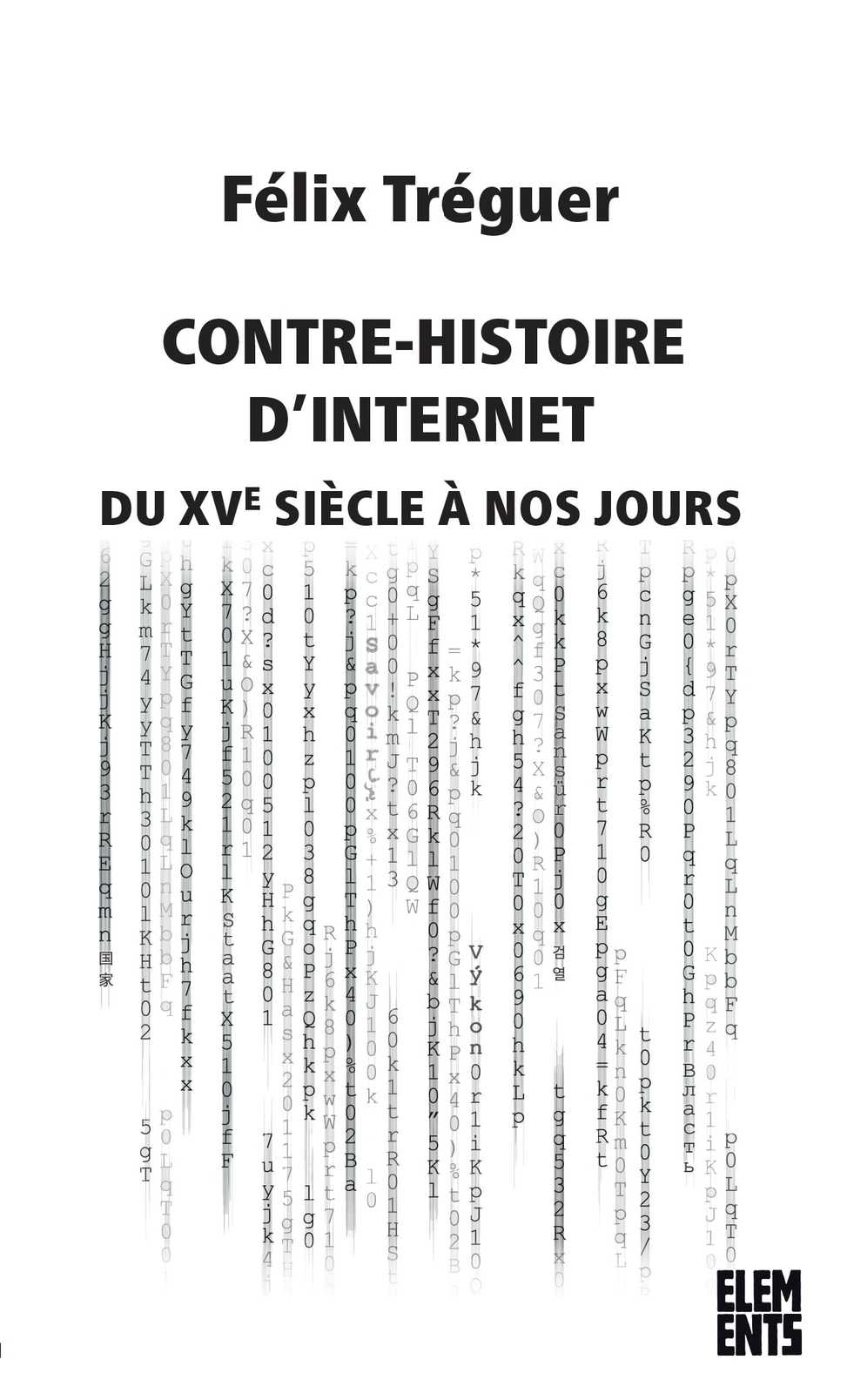
This counter-history of the Internet offers an alternative reading of the emergence and development of the network of networks, breaking with dominant technophile narratives celebrating innovation and progress. By tracing the long genealogy of communication technologies since the invention of printing, the book shows how each media revolution has been accompanied by struggles for information control and tensions between emancipatory aspirations and power strategies.
The analysis highlights how these century-old power relations shaped the Internet, from early military ARPANET infrastructures to Big Tech’s stranglehold on our communications, including hackers’ and activists’ battles to preserve digital rights. This updated edition incorporates recent developments: intensification of state censorship and surveillance, consolidation of digital monopolies, but also new forms of resistance and alternative experiments.
The book defends the thesis that the Internet has never been intrinsically democratic or emancipatory, but constitutes a terrain of permanent conflicts where fundamental issues of freedom of expression, privacy and collective autonomy are at stake. It advocates for de-escalating digital infrastructures as a condition for a genuinely free digital communications infrastructure.
Full reference: Tréguer Félix, 2023, Contre-histoire d’Internet : du XVe siècle à nos jours, Revised and updated edition, Agone.
-
This is especially welcome considering that my former publisher, Fayard, is about to be bought by far-right billionaire Vincent Bolloré, who will be exerting overt political pressure inside Fayard. ↩︎